The restaurant industry has been under intense pressure since the start of COVID-19 in March of 2020. With shut downs, reduced capacity limits, labor shortages, and rising wages – operators are digging into the numbers and taking a hard look at every dollar spent and every dollar saved.
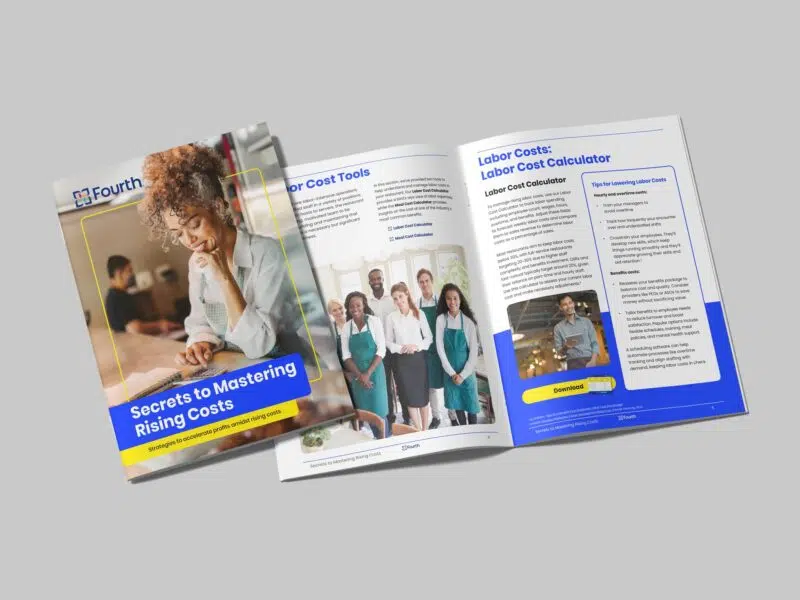
Our goal with this short guide is to show you the simple yet effective ways restaurant operators and managers can cut labor costs while optimizing your people, performance and profits. Some ideas you could literally start doing the minute you’re done reading. Others may take a little more time, thought, planning and accountability. Either way, the return on investment is totally worth your time because all of these small changes add up to big savings.
You’ll find these cost-cutting and dollar-savings tips are broken down into ways that you can:
Under pressure. If you’re a restaurant operator, David Bowie has summed up in two words the way you’re feeling about your profit margins.
Margins have always been slim in this industry, but rising wages and slowing or static traffic have intensified the squeeze. Operators are scrutinizing every dollar spent and every dollar saved.
The goal of this guide is to show simple yet effective ways restaurant operators and managers can cut labor costs while optimizing people, performance, and profits.
These strategies range from immediate actions to longer-term process improvements, all of which deliver meaningful return on investment.
Without time clock enforcement, 15–20% of restaurant staff clock in at least 10 minutes early each day. Employees may also “ride the clock” at shift end, increasing overtime and paid labor hours.
Enforced clock-ins through POS and labor management integrations allow employees to clock in only within approved windows, reducing unnecessary labor spend.
Employees often work multiple roles at different pay rates. Clocking in under the wrong job code can increase payroll costs and administrative correction time.
Scheduling system integrations prevent clock-ins under incorrect job codes using automated controls.
Managers can spend four hours or more creating schedules each week. Online scheduling tools reduce schedule creation time by up to 75% by allowing schedule copying and incremental adjustments.
Employees receive instant updates through mobile apps, reducing communication errors and payroll costs.
Overtime reports show scheduled and actual overtime before it happens, enabling managers to adjust schedules proactively.
Tools such as overtime warning reports highlight when and where overtime may begin, helping control labor spend.
Poor labor controls — combined with waste, spoilage, and theft — add up to a $0.05 loss on every sales dollar.
For a restaurant with $2M in annual sales, that’s $100,000 lost every year.
Overstaffing leads to wasted payroll and low productivity, while understaffing causes burnout, service issues, and guest dissatisfaction.
Building schedules based on sales data, weather, events, and promotions ensures optimal labor coverage.
Forecast-driven schedules allow managers to stagger shift start and end times in 15- or 30-minute increments, producing meaningful labor savings over time.
POS and scheduling integrations eliminate duplicate data entry and reduce costly errors by syncing schedules and actual punch data nightly.
Controlling labor costs does not require reducing wages. Paying a living wage improves productivity, satisfaction, and retention—critical as wages rise nationwide.
Scheduling templates based on sales targets or seasonality reduce creation time and prevent under- or overstaffing.
Labor optimization requires precision. Quarter-hour forecasting predicts the minimum staff needed based on sales budgets and labor targets.
Balancing new employees with experienced staff improves efficiency, reduces errors, and limits waste in both front and back of house.
Technology can automate break and meal period planning, ensuring compliance while creating breaker shifts to maintain coverage.
Employees expect flexibility. Online scheduling tools allow shift swaps and pickups while showing managers the labor impact of each change.
Advanced labor forecasting uses historical sales, transactions, and wage data to generate optimal schedules using predictive algorithms.
Comparing scheduled labor to budgeted labor before posting schedules provides insight into financial performance and keeps labor within targets.
Labor as a percentage of sales helps managers balance staffing levels. The ideal labor percentage is 14-21%. Percentages in the high 20s or higher can threaten profitability, while too low may signal understaffing.
Sales per Labor Hour (SLPH) is a key KPI that avoids distortions caused by discounts or price changes and supports more accurate staffing decisions.
Large discrepancies between actual and scheduled hours are a leading indicator of poor staffing. Reviewing this data improves future scheduling accuracy.
Total estimated annual savings per store: $8,031
| Payback metric | Estimated savings | Annual value per store |
|---|---|---|
| Optimize hourly labor Forecast-driven scheduling, enforced and optimized employee schedules |
1 hour/day ($8) | $2,904 |
| Manager time savings Shift swaps and trades, time-off requests, shift questions |
½ hour/day ($5) | $1,815 |
| Overtime visibility Accurate tally of actual hours worked and forecasted hours based on remaining shifts and in-week changes |
½ hour/week ($6) | $312 |
| Reduced turnover and hiring costs Engaged employees working desired shifts — lower onboarding, training, and uniform costs |
2 employees/year ($1,500 typical) | $3,000 |
| Total estimated annual savings per store | $8,031 | |
Operators already have enough to manage each day. Reducing administrative busywork enables greater efficiency, profitability, and control over labor and inventory.
Save time, reduce costs, and increase profitability with Fourth’s intelligent solutions.